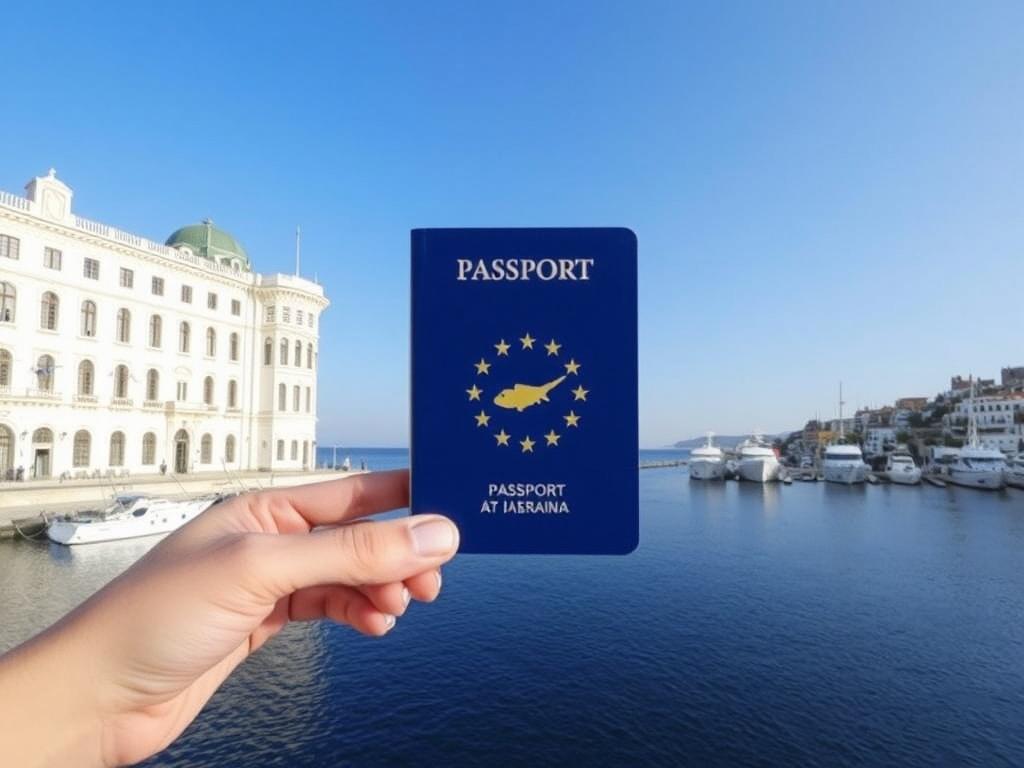
EU Passport Through Cyprus Investment: Complete Requirements Breakdown
The pathway to an EU passport via investment in Cyprus has drawn sustained interest from high-net-worth individuals, entrepreneurs, and families seeking enhanced mobility, business opportunities, and a European legal status. Early in the decision-making process, prospective applicants should review official requirements, financial obligations, and practical implications. For immediate reference and detailed program materials, consider resources such as Cyprus citizenship by investment, which collect program documents, advisory contacts, and market commentary.
This article examines the Cyprus route from multiple angles: legal history, eligibility and Cyprus citizenship requirements, the structure of investment options, compliance and due diligence, fiscal consequences, timeline expectations, policy risks, and practical advice for applicants. The narrative is technical where necessary, procedural where relevant, and pragmatic throughout, designed to help decision-makers evaluate whether an EU passport Cyprus investment suits their objectives.
Understanding the rules and risks up front is essential: an EU passport obtained through Cyprus investment is a complex, compliance-heavy pathway, not a quick transactional purchase.
Program overview and historical context
The idea of acquiring nationality by making a qualifying economic contribution is not new; what distinguishes the Cyprus model is its combination of property, business investment options and historically rapid processing under certain versions of the program. Cyprus has revised its approach several times in response to domestic debate and international scrutiny. Those evolutions affect both the operational requirements and investor expectations today.
Historically, Cyprus offered multiple routes that combined direct investment in real estate, investment funds, or local businesses with residency and expedited naturalisation. Legislative adjustments tightened eligibility, raised minimum contribution levels, and strengthened due diligence. Current applicants must evaluate both the statutory framework and administrative guidance issued by the Ministry of Interior and relevant departments charged with processing applications.
The program’s evolution shows a clear trend: higher transparency and more stringent checks, shrinking the gap between marketing claims and enforceable requirements.
Legal framework and main statutory requirements
Nationality and citizenship in Cyprus are governed by the Citizenship Law as amended and a set of ministerial decisions that detail specific financial thresholds and procedural steps. Any analysis must separate statutory criteria (those encoded in law) from executive-level policy guidance and administrative practices that change faster than primary legislation.
At a minimum, applicants must satisfy identity, background, and investment thresholds, and demonstrate genuine financial capacity to undertake and sustain the required investment. The state retains discretionary authority in cases involving public interest, national security, or negative due diligence results. Legal counsel experienced in immigration and corporate law is critical early in the process to ensure the applicant’s file aligns with both letter and practice.
Legal certainty requires more than paperwork: it demands careful alignment with the statutory language and proactive management of any discretionary checkpoints.
Who is eligible: Cyprus citizenship requirements explained
Eligibility centers on three pillars: the principal applicant’s personal characteristics, the qualifying investment, and any dependants or associated parties included in the application. The principal must be at least 18 years old, possess clean criminal records across jurisdictions of residence and citizenship, and be able to document legitimate sources of funds for the investment. The list of qualifying investments and the minimum sums are specified in government instruments and may be adjusted over time.
Dependent inclusion typically covers a spouse, children below a certain age, and frequently parents and grandparents if specific conditions are met (such as contributory living support). Each dependent’s documentation and vetting are treated as part of the broader application package. Importantly, fulfilling the Cyprus citizenship requirements is not limited to one-off financial proof; applicants must show ongoing ties or residence in some versions of the program if stipulated by the current policy.
Eligibility is a triad: personal background, qualifying capital, and the proper legal inclusion of dependants — miss any element and the application risks delay or denial.
Personal background checks and documentation
Background checks examine criminal history, tax compliance, sanctions lists, and politically exposed person (PEP) status. Documents commonly required include certified birth certificates, passports, marriage certificates, police clearance certificates from all countries of residence since adulthood, and financial records that demonstrate the origin of funds. For corporate funds, audited statements, shareholder registers, and transactional proof may be requested.
Given that due diligence is now a central focus of citizenship by investment programs across Europe, applicants should anticipate requests for multiple supporting documents and independent verifications. Submission of incomplete or inconsistent documentation frequently results in protracted clarification rounds, which can extend processing times and increase administrative scrutiny.
Investment routes and Cyprus investment program requirements
Over time, Cyprus offered several qualifying routes: direct purchase of real estate, investment in government bonds, corporate equity or bonds in local enterprises, and business development contributions that spur economic activity and jobs. The balance between passive investments (such as property acquisition) and active economic engagement (creating businesses and jobs) matters for both legal standing and public perception.
Current program iterations emphasize higher minimum thresholds and more robust proofs of economic benefit. Below is a concise comparison of common routes and their operational details. The table does not replace official guidance but serves as an illustrative snapshot of typical options that applicants evaluate when aligning objectives with compliance obligations.
| Route | Typical minimum investment | Operational notes |
|---|---|---|
| Residential property purchase | High-value property (often with additional donation/fees) | Requires clean purchase title, possibly minimum holding period; rental or resale restrictions may apply. |
| Commercial real estate or business investment | Variable; higher thresholds for job creation components | Active management and demonstrable economic impact strengthen the case. |
| Investment funds or corporate bonds | Investment channelled into specific qualifying vehicles | Requires regulated fund structures and transparent governance; liquidity controls may apply. |
Choice of route should reflect both the investor’s risk profile and the demonstrable economic impact required by the Cyprus investment program requirements.
Real estate specifics and compliance
Real estate remains one of the most visible routes. Authorities require clear chain-of-title, proof of transfer from legitimate funds, and adherence to local planning and taxation rules. Often the combination of a property purchase plus a donation or government fee is necessary to meet the overall economic contribution target set by policy. Applicants must also be conscious of mortgage leverage: heavily leveraged purchases may be viewed less favorably unless the source of the down payment and loan origin is transparent.
Property located in certain zones could carry additional scrutiny, and mixed-use or commercial projects typically demand more extensive documentation to prove their economic value (for example, employment pledges or business plans). Investors should plan for professional valuations and legal title reviews before contract signing.
Application process: step-by-step procedural guide
The procedural workflow for acquiring an EU passport Cyprus investment involves several discrete stages: preparatory legal and financial due diligence, assembly of certified documents, submission of the application, a vetting and interview phase if applicable, and finally the decision and post-approval formalities (oath taking, passport issuance, registry updates).
Timelines are influenced by the completeness of documentation, the applicant’s background complexity, the volume of applications under review, and administrative backlogs. Professional advisers often manage the submission to reduce errors and respond to follow-up requests. Below is a practical list of core steps commonly seen in programme procedures.
- Pre-application review: gather identity documents, proof of funds, and initial legal checks.
- Structure investment: decide route (property, business, fund) and execute agreements with escrow where required.
- Formal submission: file application with certified translations and notarised documents.
- Vetting and clarifications: respond to any governmental queries or additional due diligence.
- Decision and formalisation: receive approval, complete required formalities, and obtain passport.
Meticulous preparation at the pre-application phase shortens processing time and significantly lowers the chance of adverse findings during vetting.
Key documentation checklist
While lists can vary by individual circumstances, applicants should prepare the following with certified translations as required: valid passport copies, birth and marriage certificates, police clearance certificates from jurisdictions of residence, bank statements tracing the origin of funds, proof of ownership or transfer for property, business registration documents, and letters of reference from banks or legal advisors.
In complex structures (for example, where funds are routed through companies or trusts), additional documents such as corporate resolutions, beneficial ownership declarations, and audited financial statements become necessary. Authorities expect clear lineage of funds from their origin to the point of investment in Cyprus.
Due diligence, vetting standards, and rejection risks
Robust due diligence is the keystone of modern citizenship by investment policy. Authorities assess criminal history, sanctions exposure, tax compliance, adverse media, and the legitimacy of funds. The vetting process uses international databases, intergovernmental information sharing, and private-sector screening tools. High-risk indicators — such as prior convictions, ongoing investigations, or materially inconsistent financial narratives — can lead to immediate rejection.
The rejection risk increases when applicants rely on opaque corporate structures, undisclosed beneficiaries, or rapid changes in asset ownership timed to the application. Authorities take particular interest in politically exposed persons, complex cross-border transactions, and funds sourced from jurisdictions with high corruption risk. Applicants should therefore ensure full transparency and be prepared to provide corroborating evidence for all financial inflows.
Transparency is the single most important mitigant against rejection; undisclosed complexities are commonly the cause of negative outcomes.
What triggers enhanced scrutiny?
Enhanced scrutiny typically arises if the applicant is a PEP, has substantial assets in jurisdictions on sanctions lists, has frequent recent transfers through opaque intermediaries, or has inconsistent documentation. Large cash flows without credible origin narratives or sudden reassignments of asset ownership prior to application are red flags. In each scenario, authorities may request further forensic accounting, independent attestations, or proof of tax compliance.
Applicants should expect supplementary background interviews and potential delays where enhanced due diligence is triggered. Preparing comprehensive, corroborated financial records and consistent narratives reduces the likelihood of protracted investigations.
Taxes, residency, and post-citizenship obligations
Receiving citizenship does not automatically exempt an individual from Cyprus or foreign tax obligations. Tax residency depends on physical presence and statutory residency tests. Cyprus provides favorable tax regimes for certain residents, but claiming tax advantages requires meeting specific residency thresholds and abiding by local tax compliance rules. Applicants must distinguish between citizenship (a legal status) and tax residency (a separate fiscal designation).
Post-citizenship obligations often include registration in local civil registries, notification of address, and in some cases minimal residency or declaration steps tied to the particular variant of the programme in effect at the time of admission. For business investors, maintaining operational activity in Cyprus — employment records, company filings, and tax returns — may be necessary to demonstrate ongoing compliance with program expectations.
Citizenship is not a tax silver bullet: careful planning is required to align residency, tax status, and business activity with both Cypriot and international obligations.
Costs, expected timelines, and resource planning
Beyond the headline investment minimums, applicants should budget for legal fees, advisory fees, translation and notarisation costs, due diligence screening fees, government administrative fees, potential donation components, and ongoing maintenance costs (tax filings, corporate compliance, property upkeep). A conservative financial plan should allocate an additional 10–20% of the investment sum to cover transaction and compliance expenses.
Timeline expectations vary: straightforward, well-documented cases can proceed more quickly, while complex files or cases subject to enhanced vetting can extend several months. Applicants should plan for a multi-stage timeline that begins with 2–4 weeks of preparatory work, several weeks for investment execution, and 3–9 months for governmental processing in typical scenarios, with outliers taking longer.
| Item | Estimated cost (illustrative) |
|---|---|
| Minimum qualifying investment | Varies by route; high-value property or equivalent |
| Legal and advisory fees | 2–5% of transaction value (depending on complexity) |
| Due diligence and vetting | Several thousand euros per principal and dependent |
Budget realistically: direct investment is only the largest line item — compliance and professional fees are material and recurring.
Political, legal, and reputational risks
Citizenship-by-investment schemes attract political debate, regulatory scrutiny, and public attention. Cyprus in particular has adjusted practices in response to criticism about overly generous terms and insufficient vetting in earlier program versions. Prospective applicants must consider transitional risk — the program rules may change while an application is pending or after citizenship is granted — and reputational risk associated with perceived impropriety or adverse media coverage.
Legal risk includes the potential for revocation in cases of fraudulent representations or material misstatements. While revocation is relatively rare, it is a live legal risk; authorities reserve the right to rescind nationality granted based on false information or criminality discovered post-approval. Reputationally, investors should think about how EU citizenship gained through investment will be perceived by partners, banking institutions, and relevant governments.
An EU passport obtained through investment is durable only so long as the underlying documentation and conduct remain unimpeachable; reputational risk management is therefore integral to the investment decision.
Comparative perspective: European passport investment options
Applicants often evaluate Cyprus against other European options, weighing factors such as program transparency, minimum investments, residency requirements, mobility benefits, and post-grant obligations. Each jurisdiction balances economic aims with political appetite for wealthy migrants and different compliance postures. A careful comparative analysis helps identify which program aligns best with personal, business, and tax-planning objectives.
Key comparative considerations include visa-free access provided by the passport, the presence of any stay or residence obligations, language and cultural integration needs, and the legal ease of including family members. Markets change; some jurisdictions have tightened access or replaced investor citizenship tracks with long-term residency routes that later convert to citizenship under stricter conditions.
- Mobility: not all EU passports provide identical visa access, but as EU members they confer broad Schengen-area mobility advantages.
- Residency obligations: some programs require actual residence before granting citizenship, others are fast-track but may impose reporting.
- Policy stability: historical adjustments matter — a stable, transparent framework reduces politically driven surprises.
Comparisons should prioritize legal stability and transparency over headline prices: the cheapest route can be the riskiest in the long run.
Practical case study: a hypothetical application
Consider a principal applicant, a 45-year-old entrepreneur with family, looking for expanded mobility, enhanced business access in Europe, and a secure educational environment for children. The applicant has liquid capital from the sale of a business, documented through audited accounts and tax filings. They opt for a high-value residential property combined with a demonstrable donation component to satisfy the combined economic threshold.
The applicant engages local counsel prior to negotiating property, obtains certified translations and third-party financial attestations, and routes funds through established banking channels with full disclosure to the Cypriot authorities. Due diligence reveals no adverse records. The application proceeds through vetting, and the approval arrives within the typical administrative window. Following approval, the family completes registration formalities and receives their passports; tax residency remains aligned with their country of main economic activity and is not automatically transferred by citizenship alone.
Practical success hinges on pre-emptive documentation and choosing a transparent funding pathway — proactive counsel often determines the difference between a smooth outcome and a delayed one.
How advisers, banks, and service providers coordinate
A reputable advisory team combines legal counsel, tax advisors, reputable real estate agents, and independent forensic accountants for source-of-funds verification. Banks involved in the capital transfer often perform their own AML checks and may request additional documentation beyond governmental requirements. An integrated approach reduces the administrative friction of sequential requests and creates a clear audit trail.
Service providers should have direct experience with Cyprus administrative bodies and be prepared for the documentary standards expected. Applicants benefit from advisers who provide a project management timeline, identify potential legal bottlenecks in advance, and maintain transparent fee schedules to avoid surprises.
Coordination among advisers is not an optional convenience; it is the operational glue that secures timely approval and compliance.
Making the final decision: realistic considerations for applicants
An investor’s decision should integrate strategic objectives (mobility, business expansion, family stability) with a sober assessment of legal obligations, costs, and risks. Whether the goal is a European passport for visa access or a long-term relocation plan, the Cyprus route requires consistent legal and financial transparency and an acceptance of evolving policy risk. Where uncertainty exists, conservative planning and staged investments can reduce exposure to policy changes.
Applicants should also consider post-acquisition plans: whether to claim tax residency in Cyprus, continue living elsewhere, or structure their business footprint across multiple jurisdictions. Each choice has tax, legal, and compliance implications that must be evaluated holistically with a professional advisor competent in cross-border planning.
Strategic clarity about why you want nationality informs the investment design: mobility for travel, or creating a base for business, demands different structures and commitments.
Deciding Your Next Move: Practical Takeaways and Steps Forward
For those still evaluating whether EU citizenship through Cyprus suits their aims, begin with a two-week feasibility review: gather fundamental documents, secure a preliminary legal opinion, and conduct an initial source-of-funds audit. That high-level review identifies obvious barriers early and saves time. If you move forward, structure the investment with escrow protections, use reputable financial channels, and retain counsel with direct experience in citizenship and corporate law.
Post-decision, maintain meticulous records of all transactions and communications, and plan for ongoing compliance — tax filings, corporate records, and any reporting tied to the investment. The long-term value of an EU passport Cyprus investment depends less on the speed of acquisition than on the enduring legal soundness and transparency of the entire process.
Begin with feasibility, invest in proven advice, and treat compliance costs as integral to the investment — those practices protect both the passport and your broader financial interests.
Action checklist before formally applying
To ensure readiness, confirm the following: documented origin of funds (bank statements, sale agreements, audited accounts), clean criminal records for all jurisdictions of residence, spouse and dependant documentation if they will be included, independent property valuations if applicable, and a clear plan for handling any public disclosures that may arise. This preparatory work compresses timelines and reduces operational risk.
If doubts remain about any element — origin of funds, possible adverse media, or PEP designation — address those concerns upfront with targeted remediation: legal opinions, voluntary disclosures to tax authorities, and third-party attestations. Proactive remediation frequently outweighs reactive corrections later in the review process.
Addressing potential issues before filing is the best investment you can make toward a successful application.
Frequently asked questions
- Q: What are the basic Cyprus citizenship requirements for applicants? A: Applicants must be adults with clean criminal records, provide certified documentation of identity and family status, demonstrate the legitimate origin of investment funds, and complete a qualifying investment or contribution as specified by current program rules.
- Q: How long does the application process typically take? A: Timelines vary; a well-documented application can proceed in several months, but expect 3–9 months in typical cases and longer if enhanced due diligence is required.
- Q: Is real estate the only valid investment route? A: No. Real estate is common, but commercial investments, funds, and business development routes have been used. Each route has distinct documentation, holding requirements, and evidentiary expectations.
- Q: Will obtaining citizenship in Cyprus automatically change my tax residency? A: No. Citizenship and tax residency are separate legal concepts. Tax residency depends on physical presence and local statutory tests; citizenship alone does not automatically alter tax obligations.
- Q: Can citizenship be revoked after it is granted? A: Yes. Revocation is possible where the state finds fraud, material misrepresentation, or criminality that would have caused denial had it been known at the time of decision.
- Q: What are the main risks applicants should consider? A: Key risks include rejection due to insufficient documentation or adverse findings, policy changes that alter program terms, reputational exposure, and potential revocation for fraudulent disclosures.
- Q: Should I use a local adviser in Cyprus or an international firm? A: Use both: local advisers familiar with administrative practice and international legal or tax counsel for cross-border structuring. Coordination between them reduces friction and enhances compliance.
Author

Petros Christofi
On any given morning you’ll catch me balancing a drone’s view of Cyprus rooftops with a spreadsheet of residency permits. I’m a migration solicitor who tackles visa rules like sudoku—every line must resolve neatly before sunset. After sealing a property deal, I pedal the Salt Lake trail to test if a buyer’s new commute feels right. My mission is simple: decode the island’s paperwork so you can start calling the mezé place “your local.”