Minimalist Beach House Design Ideas for Humid Climates
Creating a beach house in a humid climate presents unique challenges and opportunities, especially when aiming for a minimalist aesthetic. The balance between simplicity and functionality demands careful material choice, smart ventilation, and strategic design decisions to maximize comfort and durability. Coastal environments such as those found in Cyprus accentuate these concerns, given the persistent sea breeze and high humidity levels typical of the Mediterranean region. This guide explores minimalist beach house Cyprus concepts, integrating coastal interior design ideas with practical solutions for humid climate decor Cyprus, emphasizing light materials beach home construction and sea breeze ventilation design essentials.
Understanding the Challenges of Designing for a Humid Climate
Living by the sea is a treasure, but the humid climate comes with environmental factors that can affect your home’s structural integrity and comfort. Humidity accelerates material deterioration and promotes mold and mildew growth, often undermining the neat and clean look that minimalist designs require. Coastal salt can corrode metals and stain lighter surfaces if not managed properly. Therefore, designers and homeowners must prioritize moisture control and durability.
The climate also shapes interior comfort standards—maintaining good airflow is critical to avoid stuffy and sticky conditions indoors. By harnessing natural breezes and employing passive cooling techniques, the house becomes livable without excessive reliance on energy-consuming air conditioning. The interplay between natural ventilation and minimalist form becomes a powerful design statement.
Additionally, the high UV exposure in such regions requires thoughtful consideration of window placements and shading systems to preserve the minimalist aesthetic while protecting interiors from heat and fading.
The success of a minimalist beach house in humid regions depends on balancing durability, airflow, and simplicity without compromising comfort.
Core Principles of Minimalist Beach House Cyprus Designs
Minimalism is defined by functional simplicity, clean lines, and minimal ornamentation. However, in a humid beach environment like Cyprus, this simplicity must merge with resilience. Selecting suitable materials, thoughtful spatial layouts, and smart-use of natural environmental factors form the basis of this approach.
Firstly, the structural framework often relies on natural and treated light materials beach home builders favor for their resistance to moisture and decay. Wood, if properly sealed, concrete, and composite materials offer longevity while facilitating persuasive clean designs.
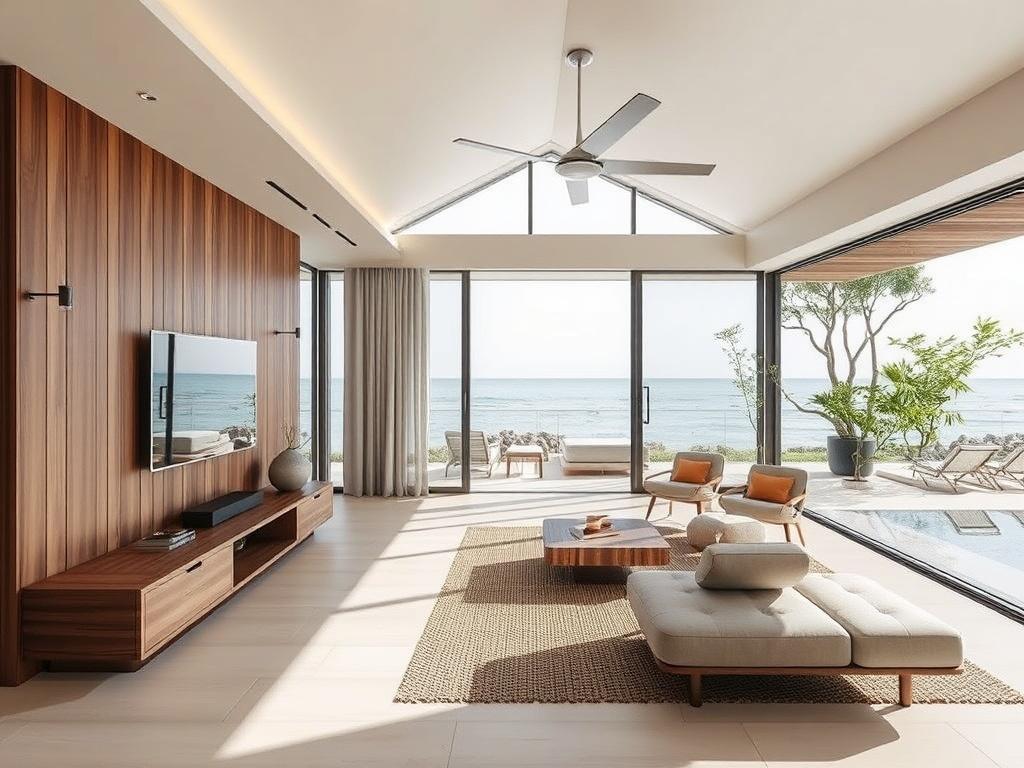
Secondly, integrating sea breeze ventilation design is crucial. Large, operable windows aligned with the prevailing winds promote constant airflow, removing excess humidity while maintaining an indoor-outdoor connection. This flow must be optimized through thoughtful room arrangement and openings—privacy and minimalist elegance need not be sacrificed.
Lastly, a neutral color palette mimicking sea, sky, and sand tones reinforces the minimalist ethos and keeps the ambiance light and airy. This extends to coastal interior design ideas where textures and materials are carefully chosen to resist moisture yet provide a soft tactile experience.
These principles together ensure not just aesthetic coherence but practical resilience in the face of humid climate challenges.
Material Selection: The Backbone of Durable Minimalist Beach Houses
Material choice in humid climates critically impacts a building’s lifespan and maintenance demands. The minimalist beach house Cyprus style prefers materials that combine visual simplicity with robust performance.
Light materials beach home construction ideally involves composites or treated wood for exterior cladding and interiors. Fiberglass panels, cementitious siding, and stainless steel accents resist corrosion and moisture better than untreated wood or metal. Exterior paints and finishes must be mold-resistant and UV stable to maintain the clean minimalist look over time.
For interiors, natural stone and ceramic tiles provide coolness and moisture resistance but must be carefully selected to avoid unnecessary visual heaviness. White-washed or light-toned hardwood flooring treated for humidity works well to bring warmth while maintaining simplicity.
Innovations in eco-friendly concrete finishes also allow for minimalist, seamless surfaces blending durability with understated elegance. The key is to marry the tactile roughness that withstands humidity without disrupting the sleek elements of design.
Choosing the right combination of light, durable materials ensures the minimalist beach home remains pristine against the test of humid seaside weather.
Optimizing Sea Breeze Ventilation Design
Ventilation is central to combating the challenges posed by humidity. Minimalist beach houses in Cyprus incorporate sea breeze ventilation design to leverage natural airflow and maintain indoor comfort without excessive energy use.
Orientation of the house is critical. Aligning windows and openings towards the prevailing sea breezes creates a natural air circulation system. Cross-ventilation is achieved by positioning windows or sliding glass doors opposite each other, facilitating a continuous exchange of moist indoor air with fresher outside air.
Designers also use elevated structures or stilt foundations that allow air to flow beneath the home, reducing ground moisture influence and cooling the floors naturally. Skylights or ventilation stacks funnel warm air upwards, preventing accumulation inside living areas.
Fine control devices such as adjustable louvers and screens protect interiors from insects and sand while allowing airflow. Using fewer interior walls and opting for open-plan designs helps air travel freely through spaces, reinforcing a minimalist spatial flow.
Intelligent sea breeze ventilation goes beyond simple window placement; it’s about creating a dynamic flow that sustains comfort year-round.
Coastal Interior Design Ideas That Complement Humid Climate Decor Cyprus
Interior design in humid climates like Cyprus favors a deliberate reduction of clutter, emphasizing function and materials that tolerate moisture without losing aesthetic value. Coastal interior design ideas rooted in minimalism lean heavily on neutral palettes punctuated by textures and natural elements.
Minimal furniture pieces made from treated woods or metal frameworks with moisture-resistant upholstery achieve a serene and breathable feel. Built-in storage solutions minimize overcrowding and reduce areas where mold might grow. The incorporation of woven baskets and natural fabrics adds warmth without sacrificing airiness.
Lighting fixtures generally stay understated—recessed lighting or pendant lamps with matte finishes fit the minimalist narrative and reduce heat transfer into interiors. Window treatments are often light, using linen or cotton blends that manage sunlight without feeling heavy.
Plants adapted to coastal environments, such as succulents or palms, are selectively introduced to enhance the natural atmosphere and improve air quality. However, overplanting indoors is avoided to prevent excess humidity around living areas.
Subtle nods to the sea in décor, like driftwood accents or sea glass elements, infuse character without overwhelming the clean lines and airy volumes typical of minimalist beach homes.
| Design Element | Purpose | Recommended Material |
|---|---|---|
| Upholstery | Durability and moisture resistance | Outdoor-grade fabrics, PVC-infused cotton |
| Flooring | Cool surface, easy cleaning | Ceramic tiles, treated hardwood |
| Storage | Clutter reduction and moisture control | Built-in wood cabinets with water-resistant finish |
| Window Treatments | Light control and ventilation | Linen curtains, adjustable louvers |
Architectural Features Supporting Minimalist Beach Homes in Humid Areas
Beyond materials and interior styling, certain architectural details enhance both the performance and minimalist appeal of beach homes in humid climates. Retractable pergolas and deep eaves are common features that provide essential shade. These elements cut down direct sunlight, reducing interior heat gain while allowing diffused light to sustain bright, airy rooms.
Roofing materials such as metal sheets with reflective coatings prevent heat absorption, while sloped roofs support effective rainwater runoff—critical in reducing moisture buildup.
Open patios and decks made from composite decking materials extend living spaces outdoors without complicating the indoor climate. These transitional areas encourage engagement with the coastal environment without compromising the minimalist footprint.
Minimalist design thrives on simplicity; the use of smooth, uninterrupted surfaces on both exterior and interior walls reduces dirt accumulation and facilitates easier cleaning—a crucial factor in beach homes exposed to salty air.
Strategically combining these architectural features helps preserve integrity and enhances occupant comfort, epitomizing the marriage of form and function in coastal minimalist design.
Landscaping Considerations for Humid Coastal Environments
The exterior landscape surrounding a beach house in humid climates also demands thoughtful design. Not only does landscaping affect curb appeal, but it also impacts moisture and airflow around the house itself.
Native drought-resistant plants dominate coastal landscapes, minimizing irrigation needs while resisting fungal infections. Ground covers such as ornamental grasses allow rainwater absorption without creating muddy, mold-prone zones.
The strategic placement of taller plants and shrubs acts as windbreaks, protecting the home from direct salt spray without blocking beneficial sea breezes. Hardscape materials are carefully selected—permeable gravel or decomposed granite encourage drainage around foundations, preventing waterlogging.
Walking paths designed from smooth, non-porous stones reduce algae formation and minimize maintenance. At the same time, open garden zones foster better air circulation and keep humidity levels around the immediate proximity of the house lower.
Smart landscaping not only enhances aesthetics but functions as a natural defense system against the adverse effects of humidity and coastal exposure.
Smart Home Technologies Adapted for Minimalist Beach Houses
Integrating smart home technologies can elevate the minimalist beach house experience by enhancing comfort and reducing maintenance challenges posed by humid climates.
Environmental sensors track humidity and temperature, automatically adjusting ventilation or activating dehumidifiers when appropriate. Automated window controls optimize sea breeze ventilation design by opening or closing apertures according to wind conditions or indoor air quality metrics.
Choosing corrosion-resistant wiring and fixtures ensures systems withstand salty air exposure. Lighting automation reduces electrical heat load while maintaining minimalist aesthetics without bulky switches or fixtures.
Additionally, smart water management systems enable efficient irrigation for humid climate decor Cyprus landscapes, monitoring soil moisture to protect both plants and minimize excess moisture around the home.
Tech integration supports the minimalist principle by handling behind-the-scenes environmental control, making the living space more intuitive and comfortable without disrupting the design ethos.
Bringing It All Together: Crafting Your Minimalist Beach House Cyprus
Successfully merging minimalist design with the realities of a humid climate such as Cyprus requires a thoughtful, multi-disciplinary approach. Prioritizing light materials beach home constructions ensures structural longevity, while embracing sea breeze ventilation design maximizes natural comfort.
The restrained, yet warm aesthetic of coastal interior design ideas combined with moisture-resistant finishes and functional furniture fosters a livable environment that honors simplicity. Architecture plays a pivotal role, framing spaces that facilitate airflow and protect from direct sun and rain exposure, while the landscape around supports environmental balance.
In essence, a minimalist beach home here is not just about appearance but about harmonizing with nature’s elements. It’s a dynamic relationship between breeze, light, materials, and human needs. When carefully orchestrated, this results in a space that is serene, practical, and eminently suited to the coastal lifestyle.
A minimalist beach house in Cyprus elegantly navigates nature’s constraints by embracing simplicity, durability, and environmental harmony.
Making Waves: Embrace Minimalism to Thrive in Humid Coastal Living
Living at the interface of sea and land, particularly within the humid clime of Cyprus, requires more than traditional design—it demands an intelligent embrace of minimalism infused with environmental responsiveness. The minimalist beach house Cyprus offers a blueprint for how modern coastal homes can resist humidity challenges while encapsulating pure, clean aesthetics.
Selecting light materials beach home builders trust enhances resilience, while sea breeze ventilation design transforms natural elements into active allies rather than threats. Coastal interior design ideas that facilitate easy maintenance and comfort enrich daily life, creating rooms that breathe with the environment.
Fundamentally, minimalist beach house design for humid climates is about creating spaces that feel effortless—spaces that respond dynamically to humidity, heat, and the ever-present sea breeze with grace and efficiency. By adopting these strategies, homeowners can enjoy the relaxed and inspiring lifestyle of Cyprus’s coast without compromise.
Minimalism is not a sacrifice; it is a refined and sustainable way to live in harmony with one of the world’s most beautiful yet challenging environments.
Frequently Asked Questions
- What are the best materials for building a minimalist beach house in humid climates?
Treated wood, composite materials, cementitious siding, and stainless steel are preferred for their moisture resistance and durability in humid, coastal environments. - How can sea breeze ventilation design improve indoor comfort?
Properly aligned windows and openings use natural wind to exchange humid indoor air with fresh outdoor air, reducing humidity and cooling the home without mechanical systems. - Which interior design elements work best for humid climate decor Cyprus?
Light, moisture-resistant fabrics, built-in storage to reduce clutter, neutral color palettes, and natural materials like treated wood or ceramic tiles work best. - How important is landscaping for a beach house in humid coastal areas?
Very important; using native plants and proper ground cover improves drainage, reduces mold risk, and protects the home from salt spray while maintaining airflow around the structure. - Can smart home technology help manage humidity in minimalist beach houses?
Yes, environmental sensors, automated ventilation, and smart irrigation systems help maintain optimal indoor and outdoor humidity levels efficiently. - What architectural features enhance minimalist beach house durability in humid climates?
Features such as deep eaves, retractable pergolas, reflective roofing, elevated foundations, and open patios help protect against sun, rain, and moisture intrusion. - Is minimalism practical for beach houses in humid climates?
Absolutely. Minimalism reduces clutter, eases cleaning, and facilitates airflow, all essential for combating the challenges of humidity while maintaining aesthetic appeal.
Author

Petros Christofi
On any given morning you’ll catch me balancing a drone’s view of Cyprus rooftops with a spreadsheet of residency permits. I’m a migration solicitor who tackles visa rules like sudoku—every line must resolve neatly before sunset. After sealing a property deal, I pedal the Salt Lake trail to test if a buyer’s new commute feels right. My mission is simple: decode the island’s paperwork so you can start calling the mezé place “your local.”